Weed-Friendly Rehab: How to Choose the Right Program
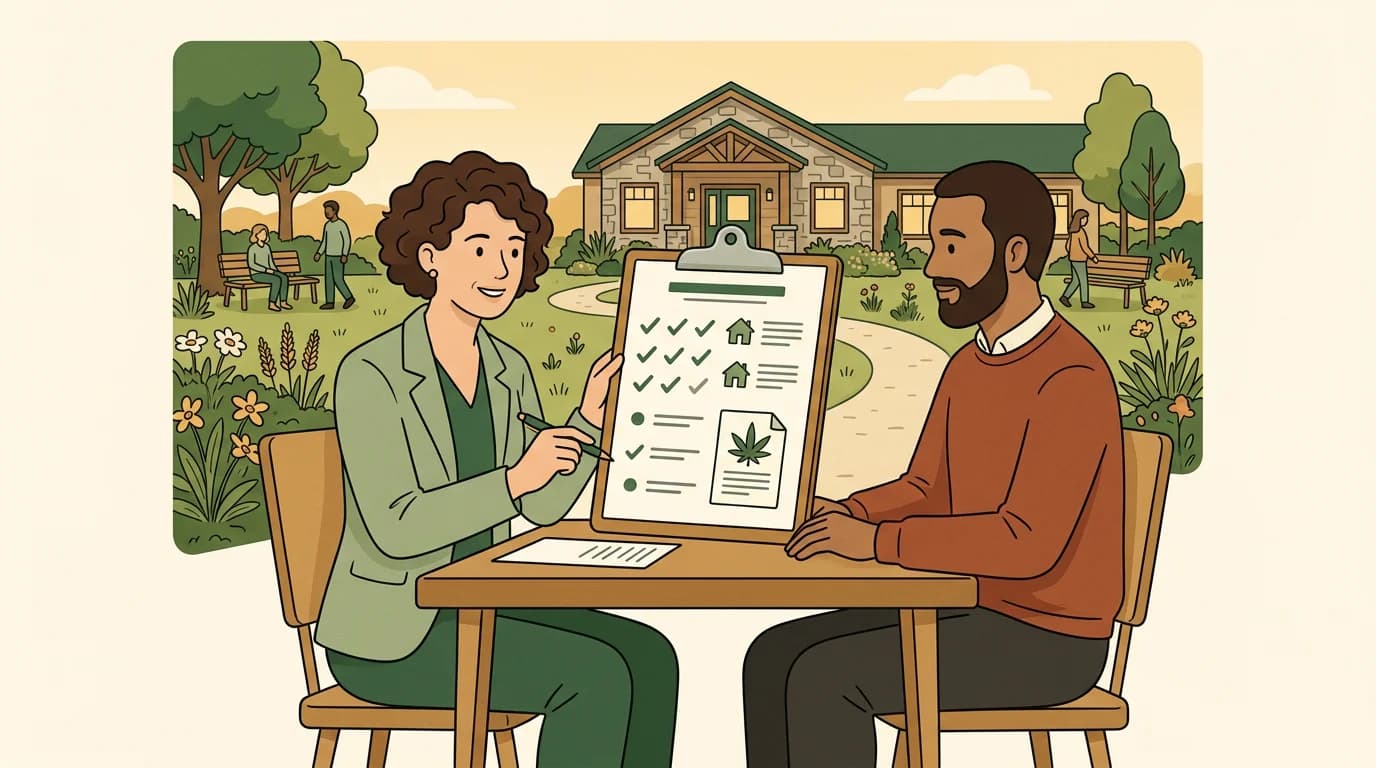
Finding a weed-friendly rehab is about more than finding a treatment center that says it accepts cannabis users. You need to know whether the program treats your condition, provides the right level of care, and has a cannabis policy that fits your clinical needs.
The most important distinction is simple: accepting someone who uses cannabis is not the same as allowing cannabis use during treatment. A program may welcome you while still requiring temporary abstinence, medical review, or restrictions on where and when cannabis can be used.
This guide explains how to compare programs, what to ask admissions staff, and how to use GreenRehabs to make a more informed choice.
What Does “Weed-Friendly Rehab” Actually Mean?
“Weed-friendly,” “cannabis-friendly,” and “marijuana-friendly” are informal descriptions—not standardized clinical certifications.
Depending on the facility, the label might mean:
Cannabis use does not automatically disqualify you from admission.
Medical cannabis is considered individually by the clinical team.
Cannabis is restricted during treatment but discussed in aftercare planning.
An outpatient program works with people who continue using cannabis outside sessions, subject to clinical and safety rules.
None of these descriptions guarantees permission to bring cannabis onto the property or attend treatment while impaired.
For the broader background, read how cannabis-friendly addiction treatment works. When comparing actual providers, ask for their current written policy rather than relying on a marketing label.
Start With Your Treatment Needs, Not Just the Cannabis Policy
A compatible cannabis policy matters, but it cannot replace appropriate addiction and mental health care.
Before comparing facilities, write down:
The substance or condition you want help with.
Whether you may need medically supervised withdrawal care.
Current medications and relevant medical conditions.
Mental health concerns such as anxiety, trauma symptoms, or depression.
Whether you need overnight care, daytime programming, or appointments around work.
Your insurance plan and realistic budget.
Tell the clinical team how often you use cannabis, the products you use, and whether you experience unwanted effects. That information helps them assess safety; it should not be treated as a reason to avoid seeking help.
If you may be physically dependent on alcohol or benzodiazepines, seek medical advice before stopping abruptly. Withdrawal can be dangerous. Do not delay urgent care while searching for a particular cannabis policy.
Compare Cannabis Rules at Each Level of Care
A policy that applies to outpatient treatment may not apply to detox, residential treatment, or associated housing.
Medical Detox
Ask whether cannabis use must be paused during medical stabilization. Discuss how the clinical team will manage symptoms and review your medications during withdrawal care.
Residential Treatment
Confirm whether cannabis is permitted on-site and who makes that decision. Ask about approval requirements, storage rules, and restrictions related to impairment during treatment.
Partial Hospitalization and Intensive Outpatient Treatment
Clarify the rules before sessions, during programming, and outside treatment hours. If you will stay in associated housing, confirm its cannabis policy separately.
Outpatient Care
Ask how your clinician will assess cannabis use and incorporate it into your treatment plan. Discuss how the plan may change if cannabis affects your symptoms, medications, or participation in therapy.
Sober Living
Sober living is a housing arrangement, not necessarily a clinical treatment program. Ask the housing provider for its own written cannabis rules, even if your treatment program permits use. The two policies may differ.
Not everyone needs every level of care. A qualified clinician should recommend the appropriate setting based on your needs.
Our guide to levels of care, from detox to outpatient explains the differences. If housing is part of your plan, also review how to choose a cannabis-friendly sober living home.
Nine Questions to Ask a Weed-Friendly Rehab
1. Does cannabis use affect admission, participation, or both?
Ask whether the program accepts people who use cannabis and, separately, whether continued use is allowed. Request an answer specific to the program you would enter.
2. Can you send me the written cannabis policy?
A clear policy should explain approval requirements, restrictions, testing procedures, and what happens when safety concerns arise. If the website and admissions staff give different answers, resolve the discrepancy before traveling or paying a deposit.
3. Is medical documentation required?
Some programs may request a medical cannabis recommendation or other documentation. Ask what is required and who reviews it. A medical cannabis card does not automatically override facility rules or guarantee clinical approval.
4. What happens if I test positive for THC?
Ask how staff distinguish prior use from a possible policy violation, what clinical review occurs, and whether a positive result could affect participation or housing. Avoid assuming that every program interprets testing the same way.
5. Are there product, storage, or impairment restrictions?
Clarify whether the rules differ for smoking, vaping, edibles, THC, and CBD. Ask about on-site possession and participation in therapy. Do not bring products without explicit confirmation.
6. Who evaluates cannabis-related risks?
A clinical professional—not only an admissions representative—should evaluate relevant symptoms, medications, and potential interactions. Ask how the treatment plan changes if cannabis appears to worsen anxiety, interfere with therapy, or create other safety concerns.
7. What evidence-based treatment will I receive?
Ask about licensed clinicians, therapy approaches, mental health services, and medications appropriate to the condition being treated. Cannabis-friendly care should not mean replacing established treatment with unsupported promises about cannabis.
8. Do the housing and aftercare providers have the same rules?
Get separate confirmation from each organization. An outpatient program’s permission does not automatically apply to the sober living home where you sleep.
9. What will I owe, and what happens if the placement is unsuitable?
Request written information about expected charges, deposits, cancellation terms, and refunds. Confirm insurance details independently with your insurer.
Use This Admissions Call Script
“I’m seeking treatment for [condition or substance], and I currently use cannabis [frequency and reason]. Does your program accept people in my situation? Would I need to stop during detox or treatment? Please send me the written policy, explain who makes the clinical decision, and confirm whether the same rules apply to housing. I also need an estimate of my costs before admission.”
Record the staff member’s name, the date, and any conditions attached to the answer. Ask for clinical confirmation when an admissions representative cannot answer a safety question.
How to Compare Programs on GreenRehabs
GreenRehabs helps you compare treatment centers with cannabis-policy information alongside other facility details.
Use policy labels as a starting point—not a guarantee of individual eligibility:
Cannabis-Friendly: Review the facility’s specific rules and clinical requirements.
Structured Recovery, Open Aftercare: Ask how restrictions during treatment differ from aftercare planning.
Traditional Recovery Program: Clarify expectations for abstinence and available support.
Unclaimed Policy: Treat the policy as unconfirmed and contact the facility directly.
Build a shortlist based on treatment needs, location, and affordability. Then confirm each facility’s current policy, licensing, availability, and insurance participation before admission.
For help interpreting the details, read understanding medical cannabis policies in treatment centers.
Does Insurance Cover Weed-Friendly Rehab?
“Weed-friendly” is not an insurance benefit category. Coverage depends on your plan, the services provided, medical necessity, network participation, and any authorization requirements.
Ask your insurer whether the specific facility and level of care are covered. Verify your deductible, copayments or coinsurance, and whether housing is billed separately. “Accepts insurance” does not necessarily mean “in-network.”
Coverage for addiction treatment also does not establish coverage for cannabis products.
Start with will my insurance pay for rehab? If you are uninsured, explore ways to pay for rehab without insurance.
Red Flags to Watch For
Be cautious when a program:
Promises cannabis will cure addiction or guarantee recovery.
Describes cannabis as risk-free for everyone.
Cannot explain its policy in writing.
Pressures you to pay before discussing clinical suitability and costs.
Avoids questions about licensing, staffing, or treatment services.
Encourages you to conceal cannabis use or medications from clinicians.
A respectful program can acknowledge your preferences while explaining why a particular restriction may be clinically appropriate.
When Cannabis May Need to Be Reconsidered
Cannabis-friendly care should leave room for an honest discussion about cannabis itself.
The National Institute on Drug Abuse notes that cannabis can cause anxiety, paranoia, impaired thinking, and other adverse effects. Cannabis use disorder can also develop, and cannabis can interact with medications.
If cannabis is contributing to panic, difficulty functioning, loss of control, or other symptoms, discuss that with your clinician. A treatment plan may include reducing or stopping use rather than continuing it.
For more context, read harm reduction and cannabis during rehab. Harm reduction is an individualized approach—not a promise that every substance is safe for every person.
Frequently Asked Questions
Can I go to rehab if I still smoke weed?
You can seek treatment while currently using cannabis. Admission and ongoing-use rules vary by facility and clinical circumstances. Be honest during assessment and ask what changes, if any, are required before admission.
Can I smoke weed at a weed-friendly rehab?
Not necessarily. A program may accept cannabis users while prohibiting smoking, on-site possession, or impairment during treatment. Confirm the exact rules before bringing anything with you.
Is weed-friendly rehab the same as rehab for marijuana addiction?
No. The first generally describes a program’s approach to people who use cannabis. Treatment for cannabis use disorder addresses cannabis use that is causing impairment or distress. A provider may offer both, but you should ask.
How do I find a weed-friendly rehab near me?
Start with location and level of care, review cannabis-policy information on GreenRehabs, and contact suitable facilities. Confirm clinical fit, current rules, and payment details rather than choosing solely by proximity or a policy badge.
Find Care With Clear Expectations
The right program should explain what it treats, how it handles cannabis, and what your care will cost—before you commit.
Explore treatment centers on GreenRehabs and use the questions above to compare your options. Aim for transparent policies and appropriate clinical care, not simply the fewest restrictions.
This article provides general educational information, not individualized medical advice. Treatment decisions should be made with a qualified healthcare professional. Facility policies and insurance benefits can change.