Weed-Friendly Rehabs in California: A Complete Guide to Cannabis-Friendly Treatment

Finding Weed-Friendly Rehabs in California
California has a long history with cannabis. It was the first state to legalize medical marijuana and is home to one of the largest legal cannabis markets in the world. It also has more addiction treatment programs than almost any other state. Put those two facts together and it's no surprise that so many people search for weed-friendly rehabs in California.
If you use cannabis — whether for chronic pain, anxiety, sleep, or simply as part of your life — and you need help with alcohol, opioids, methamphetamine, or another substance, you may be worried that your cannabis use will get you turned away. In California, that's less likely than almost anywhere else. This guide explains how California's laws shape rehab cannabis policies, what to expect from a weed-friendly rehab, how to pay for treatment, and how to find the right fit.
New to the topic? Start with our overview of weed-friendly rehabs and how cannabis-friendly treatment works, then come back here for the California-specific details.
California Cannabis Laws and What They Mean for Rehab
Medical Cannabis: Proposition 215
In 1996, California voters passed Proposition 215, the Compassionate Use Act, making California the first state to allow medical cannabis. Patients with a physician's recommendation can use cannabis for conditions such as chronic pain, cancer, glaucoma, migraines, and other serious or persistent symptoms. California also offers a voluntary state Medical Marijuana Identification Card (MMIC) program run through county health departments.
Adult-Use Cannabis: Proposition 64
In 2016, Proposition 64 — the Adult Use of Marijuana Act — legalized recreational cannabis for adults 21 and over, with licensed retail sales beginning in January 2018. The legal market is regulated by the California Department of Cannabis Control. Adults can legally possess limited amounts of cannabis and grow a small number of plants at home.
What Legalization Does — and Doesn't — Mean for Treatment
Legal doesn't mean every rehab must allow it. California law lets private businesses and property owners, including treatment facilities, set their own rules about cannabis on their premises. So while California's legal landscape makes weed-friendly rehabs far more common, each facility still decides its own policy. One program may allow documented medical cannabis, another may allow CBD only, and another may follow a strict abstinence model.
That's why it pays to know exactly what a program allows before you admit. Our cannabis policy guide breaks down the common policy types.
Cannabis Policies on Green Rehabs
Every listing on Green Rehabs shows a cannabis policy badge, so you know where a program stands before you call. California facilities fall into one of these categories:
- Cannabis-Friendly: These programs do not discriminate based on cannabis use. Your treatment focuses on what you're there to work on, not your relationship with cannabis.
- Structured Recovery, Open Aftercare: A focused treatment environment during your stay, with flexible aftercare planning that leaves room for your own choices about cannabis once you step down.
- Traditional Recovery: A recovery model centered on abstinence, with connected aftercare support. Still the standard at many California programs, especially those built around 12-step recovery.
You may also see an Unclaimed Policy badge. That means the facility hasn't shared its cannabis policy with us yet, so it's worth asking directly before you commit. Use these badges to filter out programs that won't work for you before you ever pick up the phone.
Where to Find Weed-Friendly Rehabs in California
California's treatment centers are spread across the state, but a few regions stand out for the number and variety of options:
- Los Angeles and the San Fernando Valley: One of the largest concentrations of treatment programs in the country, from luxury residential centers to outpatient clinics. Browse rehabs in Los Angeles.
- Orange County: Cities like Costa Mesa, Newport Beach, and Santa Ana are well known for their recovery communities and wide range of residential and outpatient programs.
- San Diego: A large and growing treatment scene with coastal residential programs and strong outpatient options. Browse rehabs in San Diego.
- Sacramento and the Central Valley: Often more affordable, with many programs accepting Medi-Cal. Browse rehabs in Sacramento.
- San Francisco Bay Area: A region with a long-standing harm reduction tradition and many integrated mental health and addiction programs. Browse rehabs in San Francisco.
Or view every program statewide on our California treatment centers page.
What to Expect at a Weed-Friendly Rehab in California
Intake and Assessment
Your first step is a full assessment covering your substance use, physical health, mental health, and current cannabis use. If you use cannabis medically, bring your physician's recommendation or MMIC and be ready to explain what condition it treats, which products you use, and how often.
Medical Detox
If you need to withdraw from alcohol, opioids, or benzodiazepines, detox comes first. This is usually the strictest stage for cannabis — many detox programs pause THC use or allow CBD only while medical staff manage withdrawal safely.
Residential, PHP, and IOP
After detox, treatment continues in residential care, a partial hospitalization program (PHP), or an intensive outpatient program (IOP). Cannabis policies generally become more flexible as you move to lower levels of care. Our guide to levels of care explains each stage in detail.
Evidence-Based Therapy
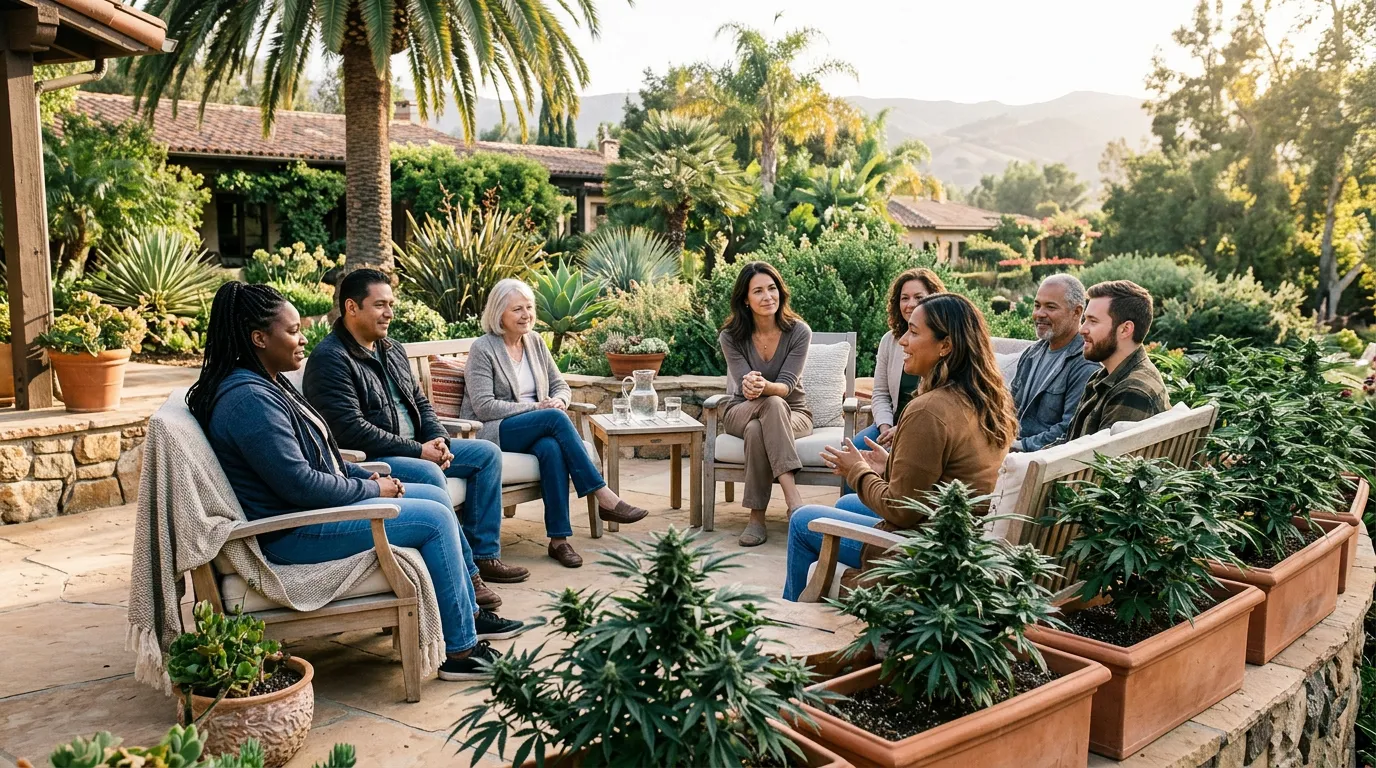
A quality weed-friendly rehab still provides the same core treatment as any reputable program: individual and group therapy, cognitive behavioral therapy (CBT), dialectical behavior therapy (DBT), trauma-informed care, family programming, and medication-assisted treatment (MAT) such as buprenorphine or naltrexone when appropriate.
How to Pay for Rehab in California
Private Insurance and Covered California
Under the Affordable Care Act and federal mental health parity laws, most private health plans — including plans purchased through Covered California — must cover substance use disorder treatment. Coverage is based on your diagnosis and medical necessity, not on a facility's cannabis policy, so choosing a weed-friendly rehab generally doesn't affect whether you're covered.
Medi-Cal
California's Medicaid program, Medi-Cal, covers substance use disorder treatment, and many counties provide expanded services through the Drug Medi-Cal Organized Delivery System (DMC-ODS), including outpatient care, residential treatment, withdrawal management, and medications for addiction treatment. Availability and covered programs vary by county, so check with your county behavioral health department or the facility directly.
Self-Pay and Financing
Many California facilities offer self-pay rates, sliding-scale fees, or payment plans. Our insurance and cost guide walks through how to verify your benefits and estimate out-of-pocket costs.
How to Vet a California Rehab
California has a huge number of treatment providers, and quality varies. Before choosing a weed-friendly rehab, check that it:
- Is licensed by the state. Residential and outpatient addiction programs in California are licensed or certified by the Department of Health Care Services (DHCS). You can look up a facility's license status through the DHCS Licensing and Certification Division.
- Holds accreditation. Accreditation from The Joint Commission or CARF signals that a program meets national quality standards.
- Employs licensed staff. Look for physicians, psychiatrists or psychiatric nurse practitioners, licensed therapists, and certified addiction counselors.
- Puts its cannabis policy in writing. A trustworthy program can tell you exactly what's allowed at each level of care.
- Is transparent about costs. Be wary of programs offering free travel, housing, or other incentives in exchange for enrolling — these patient brokering practices are illegal in California.
Is a Weed-Friendly Rehab Right for You?
A weed-friendly rehab may be a good fit if cannabis is part of a medical treatment plan, your primary problem is another substance, or you've been turned away by abstinence-only programs. An abstinence-based program may be a better fit if you're struggling with cannabis use disorder, if cannabis tends to lead you back to other substances, or if you have a history of psychosis or bipolar disorder, where cannabis can worsen symptoms.
There's no single right answer. The best program is the one that gets you into treatment and gives you the tools to stay well.
Frequently Asked Questions
Are weed-friendly rehabs legal in California?
Yes. Licensed California treatment facilities are allowed to set their own cannabis policies. A facility that permits medical cannabis or CBD is operating legally as long as it holds the appropriate state license and follows clinical standards.
Do I need a medical marijuana card for a weed-friendly rehab in California?
Not always, but many programs that allow THC require a physician's recommendation or a state Medical Marijuana Identification Card. CBD-only programs usually don't. Ask each facility what documentation it requires.
Can I use recreational cannabis during rehab in California?
Even though adult-use cannabis is legal in California, most treatment programs — including weed-friendly ones — limit cannabis to documented medical use or CBD during residential care. Policies are usually more flexible in outpatient programs.
Does Medi-Cal cover weed-friendly rehabs?
Medi-Cal covers substance use disorder treatment at participating facilities regardless of their cannabis policy. Whether a specific weed-friendly rehab accepts Medi-Cal depends on the facility and your county.
What's the best city in California for weed-friendly rehab?
Los Angeles, Orange County, and San Diego have the most options, but Sacramento and the Bay Area also offer many programs. The best city is the one with a program that matches your needs, budget, and support system — sometimes staying close to home, sometimes getting a fresh start.
Start Your Search
California offers more options for cannabis-friendly addiction treatment than almost anywhere in the country. Browse weed-friendly rehabs in California on Green Rehabs to compare cannabis policies, levels of care, and insurance side by side — and find a program that fits your life and your recovery.